Cultural signals
Trend case studies
The Economics of Earnedness
Perfection is now cheap. What we crave is the earned.

My hands want work. After a day of migrating from a laptop screen to a TV screen to the infinite scroll of a phone, I feel a gravitational pull toward the tangible. This impulse feels like a quiet rebellion against the dominant promise of 2025: a world of seamless efficiency engineered by AI. In this paradigm, the quirks and stumbles of human process are not learning curves, but errors to be optimized away.
This technological push is creating a powerful cultural counter-reaction. The age of AI aesthetics won’t be solely defined by what the technology creates, but by how we recalibrate meaning in its wake. But culture rarely bends in one direction for long. The same technology that mass-produces polish is quietly making imperfection [the human trace] into a ‘luxury’ good.
We see this in the backlash against the technology's failures. Plus-size communities, for example, are calling out 'false inclusivity' where AI's attempt at a 'perfect' rendering is inaccurate, even cartoonish. This failure doesn't make people want a slightly better AI; it highlights the superior value of authentic representation, making a photograph of a real human body the true 'luxury' good compared to a flawed digital imitation.

The paradox comes alive before our very own eyes. Machines can deliver polish at scale, but cultural value is migrating toward the things that visibly carry human touch, effort, or intent.
No generation feels that tension more acutely than Gen Z, who grew up fluent in both the filters of hyper-perfection and the hunger for something raw, earned, and real.
Gen Z: The Native Speakers of the Paradox: The generation most fluent in AI and the most skeptical of it.
Nowhere is this recalibration more visible than with Gen Z. Their fluency with AI is absolute, with 60% using chatbots weekly for everything from work to pseudo-therapy. This fluency, however, breeds a deep-seated skepticism.
Only 35% believe AI can create “real art,” and 85% find more meaning in work they know is human-made. They grant the machine competence, but deny it soul.
This confidence leads nearly half of them to believe they can spot AI-generated content, a higher percentage than any other generation. Yet, this certainty is fragile. Do you remember "trampoline-gate"? A viral clip of bouncing bunnies that was entirely synthetic and fooled most of us.
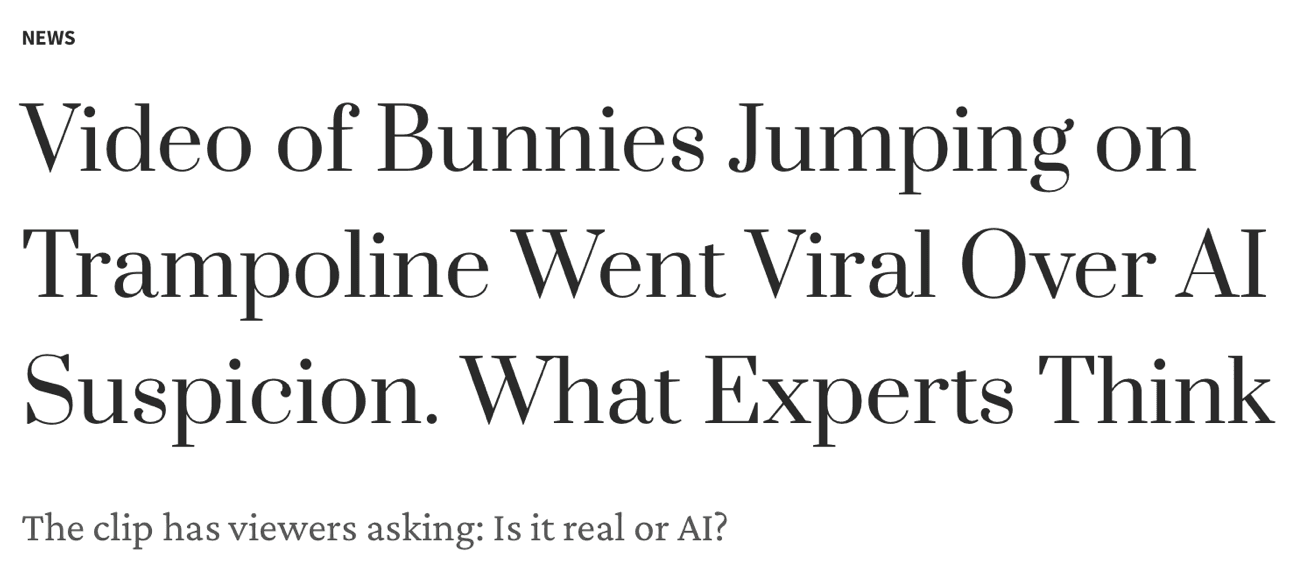
The incident exposed a foundational anxiety: if anything can be fake, the authentically real becomes a scarce and precious resource. It becomes a signal of value. This constant suspicion breeds new social rituals: a culture of constant verification, or "Authenticity Audits." Before trusting new information or an online acquaintance, people check a verifiable signal of reality. You see it in comment sections now "is this AI?"
And in that climate, value doesn’t just shift to the real. It shifts to what can be demonstrated.
The Rise of "Proof-of-Effort" Film photos, marathon logs, uncut long-form videos: receipts are the status symbol.
This new scarcity is creating an economy of "earnedness." Value is migrating from the polished output to the verifiable effort of the process.
It’s why creators on platforms like TikTok are shifting to long-form, 'uncut' livestreams, where the absence of edits serves as proof of authenticity.
It’s the logic driving the resurgence of film photography, even when that means embracing the cost, the wait, and the imperfect results. It is all part of the rebellion against the ease of a smartphone camera. According to a report from the Photo Marketing Association, global sales of photographic film have increased 75% year-over-year, with Gen Z and young millennials accounting for over 60% of new buyers.
The same impulse fuels niche communities dedicated to building custom mechanical keyboards, where hundreds of hours are spent on a process that is far more valuable than the final product.
This ethos is even reshaping wellness, where the new marker of prestige isn’t just a result, but a documented struggle. Showing the receipts of the grueling training logs for a marathon or the daily discipline of going to the gym.
In this economy of instant outputs, the flex is the effort.
And yet, not everyone has equal access to treat effort as a luxury.
The Stratification of Value: The privilege to value "process" over "output" is itself a form of luxury.
This search for authenticity is not evenly distributed; it's fractured along class lines. For the affluent, AI is a productivity tool, a virtual assistant. For many others, it's an existential threat. The data confirms this divide:
while 51% of high-income earners believe AI will benefit society, only 34% of low-income earners agree.
A July 2025 Gallup poll on the Future of Work crystallized this anxiety, revealing that 68% of Americans earning under $50,000 fear their job could be significantly impacted or replaced by AI, compared to only 25% of those earning over $150,000. AI is creating a new social stratification, dividing society into those who command AI and those who are displaced by it.
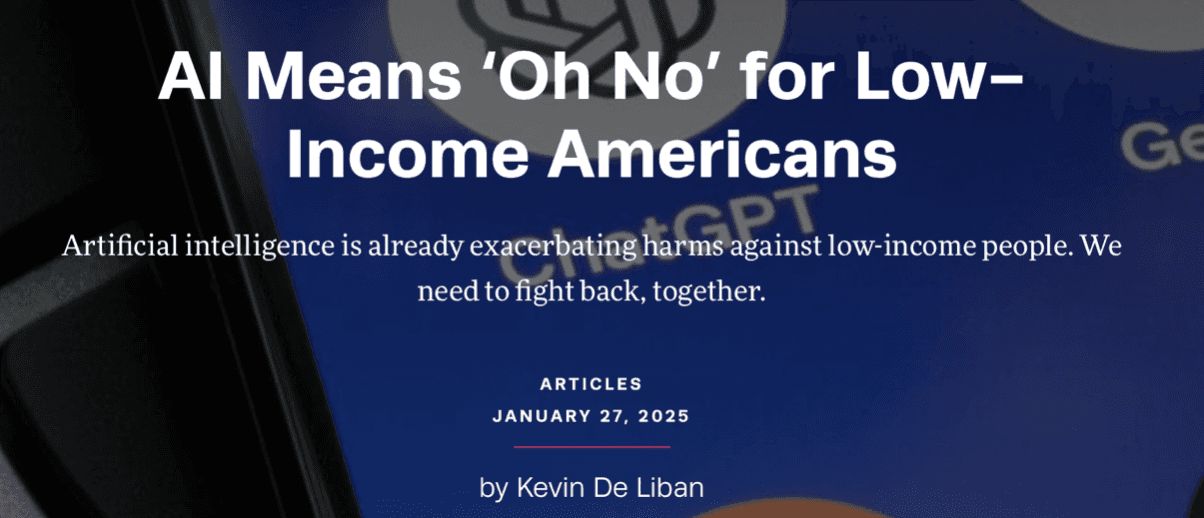
This economic anxiety is forcing a redefinition of what constitutes valuable human labor, a shift already visible in the hiring market. LinkedIn's "Future of Skills 2025" report, for example, found that job postings mentioning human-centric skills like "negotiation," "public speaking," and "conflict resolution" have seen a 40% increase in applicant engagement over the past year.
In short: earnedness itself stratifies. For some, it’s a status symbol; for others, it’s a survival mechanism.
We are Entering the Messy Middle: Between flawless fakes and human flaws, culture is splitting in two.
The result is a double-vision culture.
On one side, an infinite supply of flawless, synthetic content, which comes with a hidden tax: the psychological cost. For those living in this abundance, it can bring a sense of existential drift. Experiences feel generic, and a low-grade anxiety persists that one’s choices are algorithmically guided. This constant suspicion of artifice creates a crisis of purpose. On the other side of this divide is a burgeoning hunger for friction, flaws, and the unmistakable trace of a human hand.
The future isn't a binary choice between AI and anti-AI. It is a messy, stratified middle where meaning accrues not from what a machine can do, but from what it cannot fake.
If AI industrializes perfection, then imperfection, effort, and earnedness become the rarest resources.
The defining question is whether we will treat these human traces as mere nostalgia or as the new foundation of value itself.