Behavioral shifts
Remix, Reclaim, Repeat: How Latinos built a cultural powerhouse
Dr. Simi, the mustachioed mascot of Mexico’s Farmacias Similares, started as a humble figure meant to make affordable medicine feel approachable.

Dr. Simi, the mustachioed mascot of Mexico’s Farmacias Similares, started as a humble figure meant to make affordable medicine feel approachable. Over time, he became something much bigger. His dancing figure outside pharmacies and, more recently, his plush likeness hurled onto the stages of global stars like Harry Styles, Rosalía, and Lady Gaga made one thing clear: Dr. Simi went beyond a mascot and became a cultural icon. The “throwing Dr. Simi dolls” trend emerged as a way for Mexican audiences to express love and gratitude toward artists.This rise to popular mainstream laid the ground-floor for it's eventual expansion into the United States in early 2025.
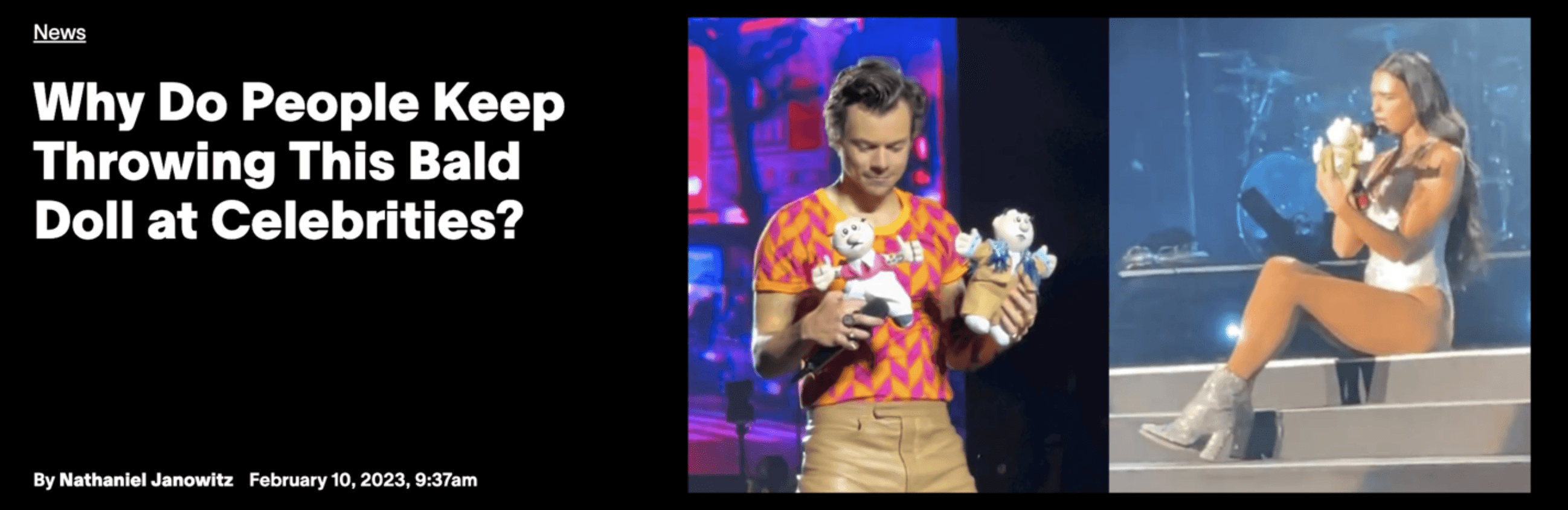
What caught my attention was how Latino this felt. It brought me joy, and I also thought, '¿Qué vas a saber?' Because really, who can fully understand how this happens if you don't carry that Latino lore yourself?
For many Latinos, especially across South America where we grow up consuming Hollywood’s products while rarely seeing ourselves reflected, watching a global superstar hold something as hyperlocal as a Dr. Simi plushie sparks a visceral sense of pride.
It’s a moment of being seen on their stage, but on our terms.
But Dr. Simi is just one example. Latino culture is filled with mascots and rituals that transform the everyday into something deeply meaningful. In my country, Ecuador, families craft Año Viejo dolls stuffed with old clothes and burn them on New Year’s Eve to let go of the past and invite renewal. At birthday parties, the piñata is a symbol of shared joy and collective play. And in religious and cultural life, icons like the Virgen de Guadalupe or lucha libre wrestlers serve as icons of faith, resilience, and popular identity.
This expansion is no accident. It is the natural result of a culture driven by participation, reinvention, and deep pride in its roots.
Latino Culture is already reshaping the mainstream
Latino culture doesn’t hold on to local rituals only. It travels and gets remixed across borders. Latin trap and reggaetón stars like Karol G, Feid, and Rauw Alejandro are selling out arenas and shaping global trends.
Karol G’s Mañana Será Bonito became the first Spanish-language album by a female artist to hit No. 1 on the Billboard 200, and fans treated it like a victory for the entire diaspora. And it was, from the completely unbiased opinion of this Karol G fan.
Peso Pluma’s breakout year pushed regional Mexican music, once seen as niche, onto the Billboard Hot 100 and Coachella’s stage, while Bad Bunny’s Calvin Klein campaign was a cultural moment that went beyond fashion, redefining what global masculinity and Latino representation could look like.
The numbers show the scale:
Spotify reported a 200% growth in global consumption of regional Mexican music between 2018 and 2023.
Bad Bunny was Spotify’s most streamed artist worldwide for three years running (2020–2022).
Billboard ranked Latino-led tours like Bad Bunny and Karol G among the top-grossing globally, often outperforming English-language artists.
Language was once seen as the biggest barrier to success in the United States, but as the country’s Latino-rooted population grows, that barrier is fading fast.
McKinsey estimates that brands that authentically engage multicultural consumers stand to unlock $70 to $90 billion in growth over the next five years. Latinos over-index by 30% to 40% on social media, mobile, and streaming platforms, and are 66% more likely to try new products, positioning them as early adopters.
But this community must be approached with intention and cultural fluency. Latinos are not a “niche market”—with 1 in 4 children in the U.S. under 18 identifying as Latino, we are the future.
Don’t sell our culture back to us. Approach it with humility and openness.
The message for brands is clear: translation alone is not enough. What’s needed is cultural humility. The ability to listen, co-create, and honor the rituals, symbols, and practices that hold deep meaning across Latino communities.
Latino culture thrives on collective participation. Whether it’s fans hurling Dr. Simi dolls at concerts, viral videos of Woody from Toy Story dancing bachata, or norteño-style remixes of Adele songs flooding social media, Latino audiences know not everything is made for them, so they make it their own. That spirit of reinvention and ownership is what powers the Latino diaspora as a global cultural engine.
Here’s the "uncomfortable" truth: brands need more Latinos at the table, not as translators or consultants, but as decision-makers, creatives, and leaders. Without that representation, even well-meaning brands risk falling into stereotypes or missing the mark.
What’s Next for Brands
Latino identity is beautifully layered. While language often serves as a thread of connection, every country, region, and diaspora carries its own subcultures, symbols, and styles. This richness brings complexity—and an extraordinary opportunity for brands willing to engage deeply and collaboratively. To succeed, brands must tap into the participatory energy, creative ownership, and spirit of partnership that define Latino culture.
Invest in cultural fluency by embedding Latine talent across strategy, creative, and leadership → Proof it works: Spotify’s expanded Latin division didn’t just translate playlists—it fostered authentic growth, helping Latin music streams surge nearly 30% year over year and elevating artists like Bad Bunny to global superstardom.
Embrace intersectionality with nuance—not as a checkbox → What this looks like: Sephora’s partnerships with Afro-Latina beauty creators weren’t just collaborations; they amplified voices at the intersections of identity, boosting cultural relevance and deepening trust among younger, multicultural shoppers.
Co-create with communities, empowering them to shape the narrative → Why it resonates: McDonald’s J Balvin and Travis Scott Meals weren’t top-down ads—they were co-created experiences that sparked massive social buzz and helped drive a 4.6% U.S. same-store sales jump.
Measure cultural resonance, not just reach → Long-term value: Nike’s partnerships with Latinx athletes and grassroots events weren’t transactional plays; they built lasting brand affinity and earned media that rippled far beyond the Latino segment.
My 2 cents as a Latina immigrant working in consumer insights:
Latino culture is a force that unites people across borders. We are a living, breathing tapestry of resilience, creativity, and pride.
We are shaped by rituals and stories passed down through generations: fables woven with indigenous wisdom, deep-rooted faith, and traditions that transform the ordinary into the extraordinary.
Whether it’s burning an Año Viejo to cleanse the past, tossing a Dr. Simi doll onto a global stage, or celebrating a quinceañera with family and community, these moments ar represent the heartbeat of identity, connection, and belonging.
It still amazes me that, in the year of Beyoncé 2025, we are still seeing hesitation to tap into one of the most valuable markets of our time.
Brands shouldn’t be asking whether to engage, but how. Are you built to co-create, or are you stuck reacting?