Cultural signals
Trend case studies
Your skin is a dataset. Someone is going to own it.
Beauty, looksmaxxing, GLP-1 patches, metabolic tracking and the future of biobeauty
This will be a two part publication. This is Part I: The Mapping.
I’ve spent the last several months tracking a shift in beauty that I think is being significantly under-read. I believe we are in the middle of a structural change in the relationship between the body and the products that claim to care for it. And with that, the data, the products, and the award infrastructure are all starting to say the same thing at once.
Your body is an interface that produces data, and not using it to optimize your health is, effectively, neglect.
This is my process to map it out.
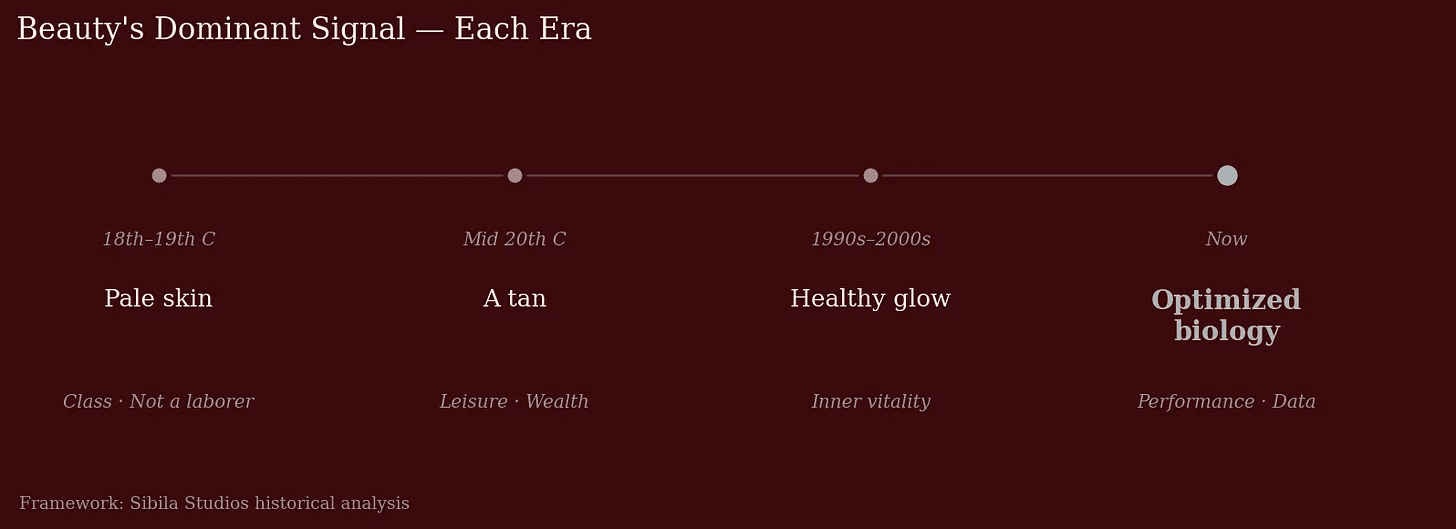
Beauty has always been a status signal. The signal just changed.
In the 18th century, pale skin meant you didn’t labor outdoors. By mid-century, a tan meant you could afford leisure. In the 1990s, “healthy glow” replaced both and claimed to reflect something inner. Each era’s beauty ideal was a proxy for whatever the dominant culture valued most.
The shift underway now is the first to merge beauty with the logic of medicine. The new status signal is biological optimization. It comes in the shape of measurable outcomes using data from your own body.
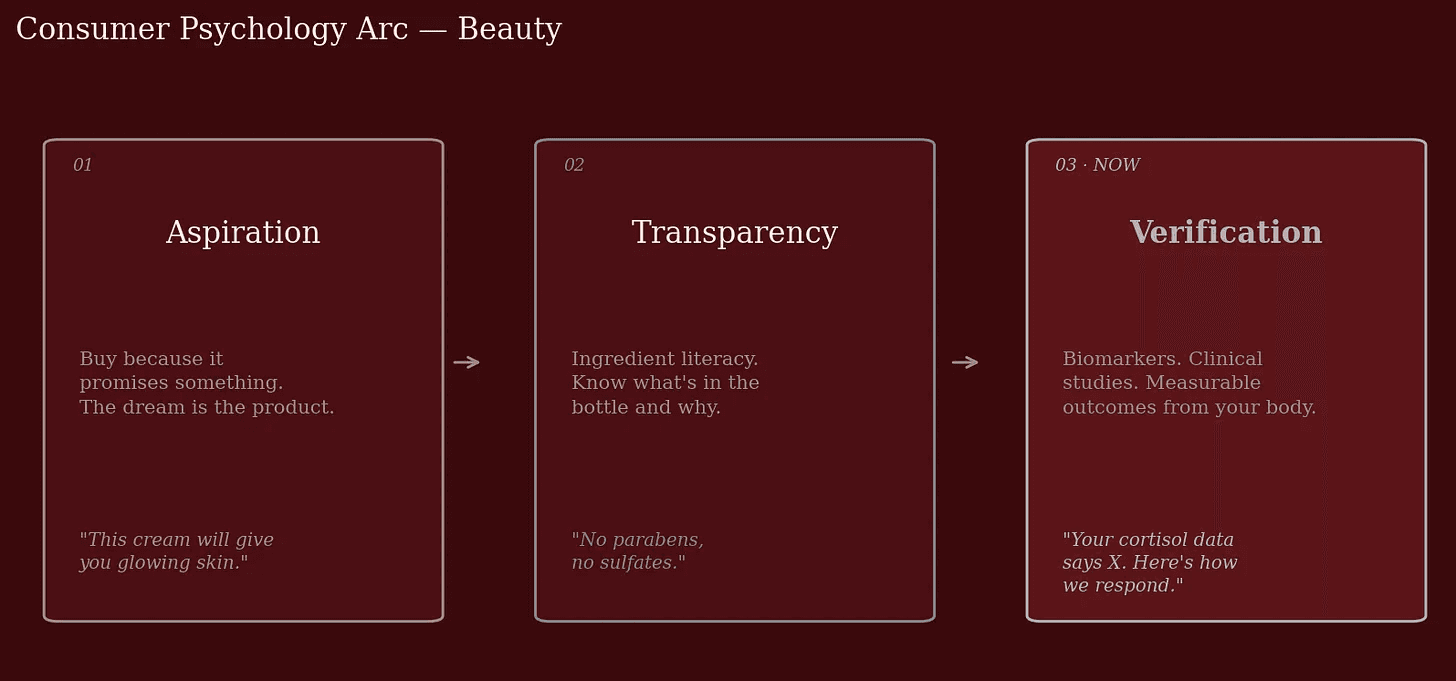
The consumer psychology arc tracks this and we can look at how fitness evolved to hypothesize where beauty is going. Fitness’ arc looked something like this: aspirational “athlete” body ideal → Tracking: Garmin + Strava → Ambient data: Apple Watch sleep score as your morning greeting. Beauty is following the same path.
Okay, but more data means I can make better choices!
Sure, but every time medicine colonizes a domain of daily life, it produces both liberation and anxiety simultaneously. Nutrition labels gave people information and inaugurated decades of orthorexia and the moralization of food into "good" and "bad." The language of "good skin" and "bad skin" is already forming in this category. A skin score of 68/100 could do to appearance what the nutrition label did to eating.

The data is not subtle
The permission structure was already in place before the data arrived. The pimple patch spent a decade making clinical formats visible and social. And once we were comfortable with visibility of treatment, everything else is fair game.
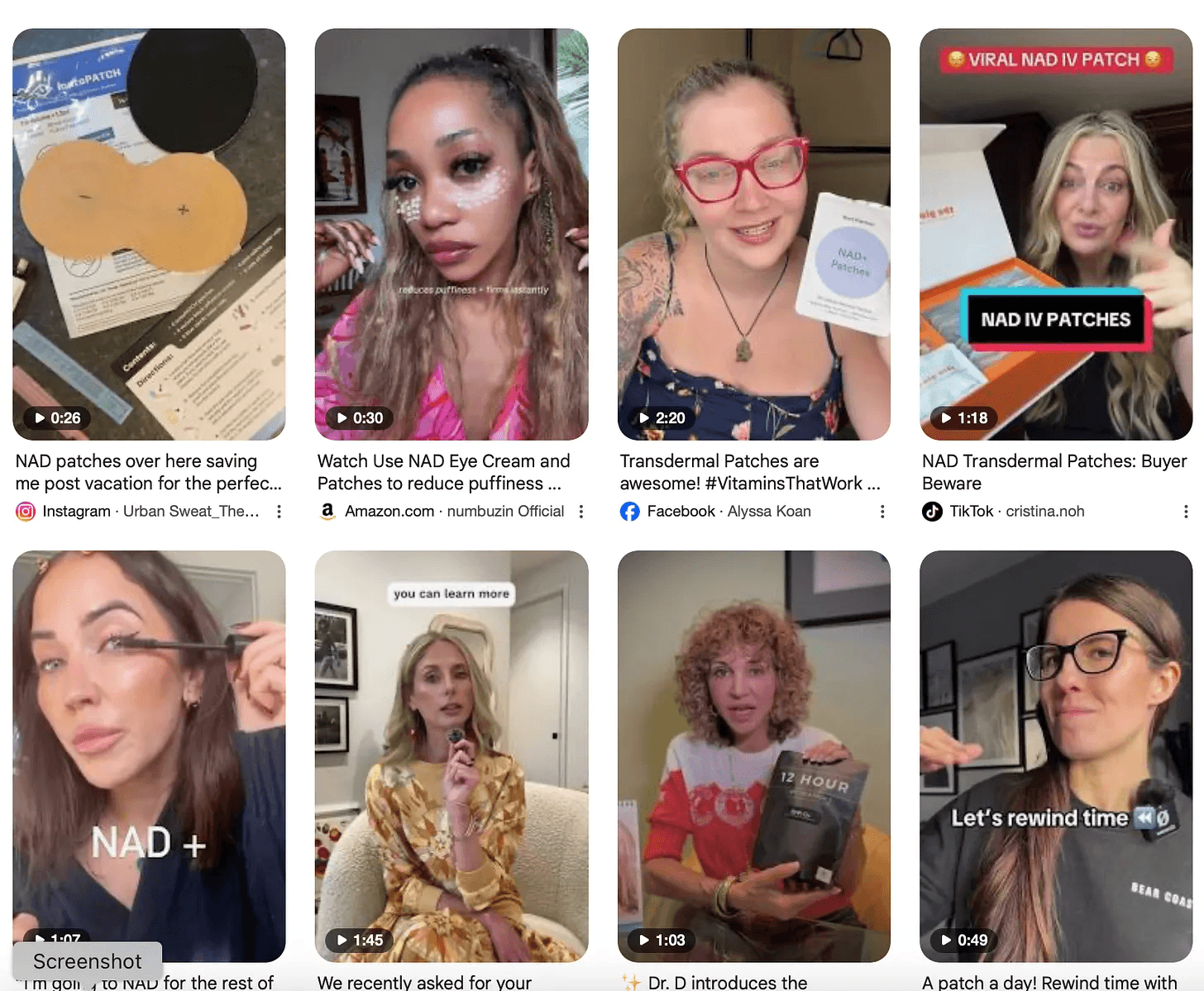
I attended a Spate webinar and their findings confirmed this inkling even more. GLP-1 patches: +1,700% YoY. NAD patches: +1,000% YoY. These are pharmaceutical and longevity interventions wearing a beauty distribution model.
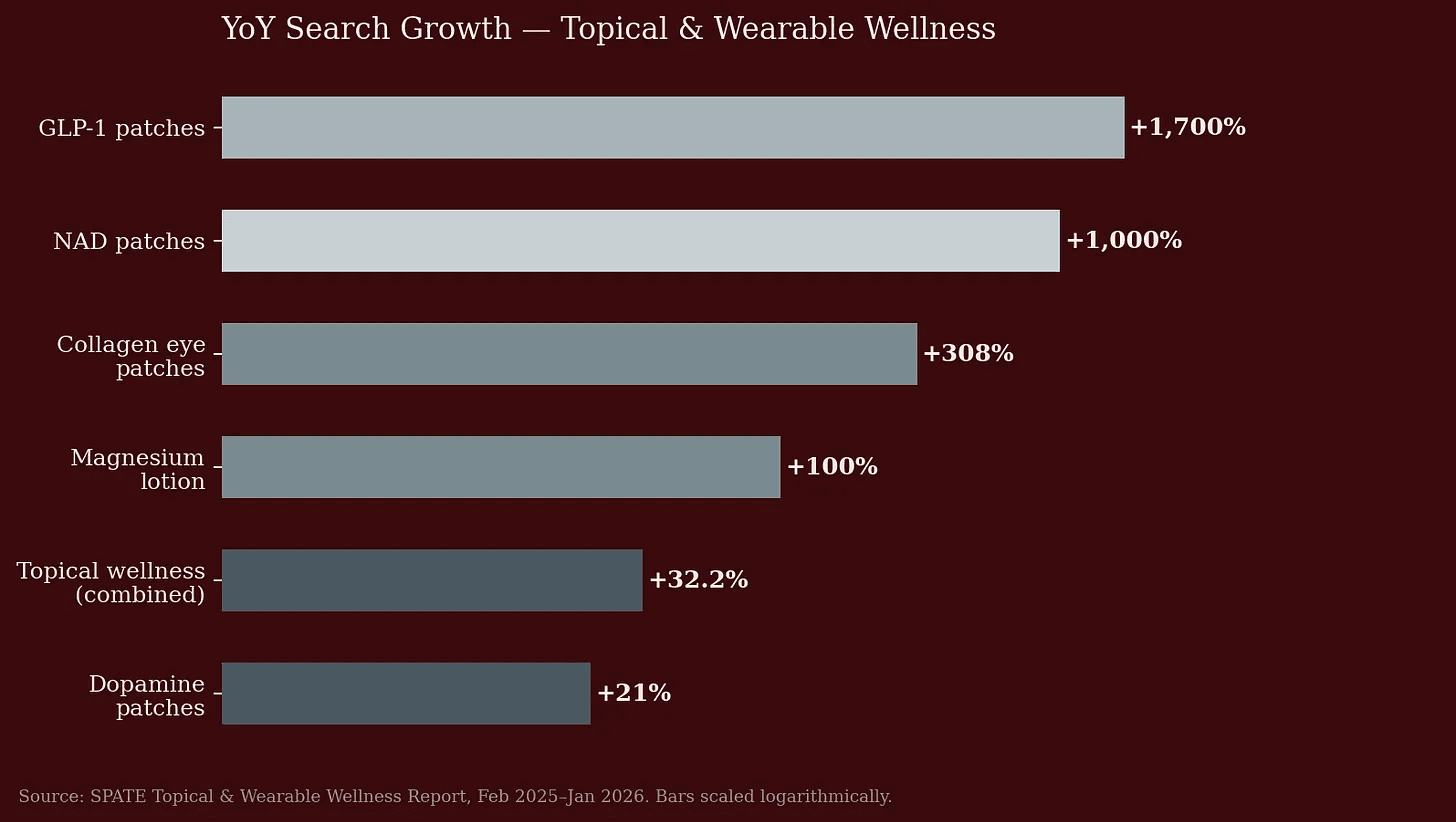
More interestingly, the consumer built their own validation infrastructure around them through TikTok creators, DTC subscriptions, and “patch reviews,” a search query that did not exist three years ago.
And now what I am wondering: who owns the metabolic beauty consumer?
Is it L’Oréal or Eli Lilly? The answer to this will define a category boundary that neither industry has fully mapped yet. Let the race for the IP begin (hint: more on this on Part II ;))
What this means commercially: This search behavior is already happening without most beauty brands in the room. Someone will own the “NAD patch reviews” query, the “cortisol skincare” result, the “metabolic beauty” category frame. The window to become the trusted voice in this consumer’s research process is 18–24 months. After that, whoever holds the search results and the peer community has a structural position that a product launch alone cannot displace.
These are the signals that I’ve saved in just three months into 2026:

Cosmoprof 2026 confirmed it
I pay close attention to Cosmoprof because the award infrastructure tends to reflect where serious R&D investment has been going for 3–5 years before the consumer sees it. The 2026 winners read almost like a confirmation of everything the search data is pointing toward across three different categories, judged by three different juries. I love a good sign of consensus.
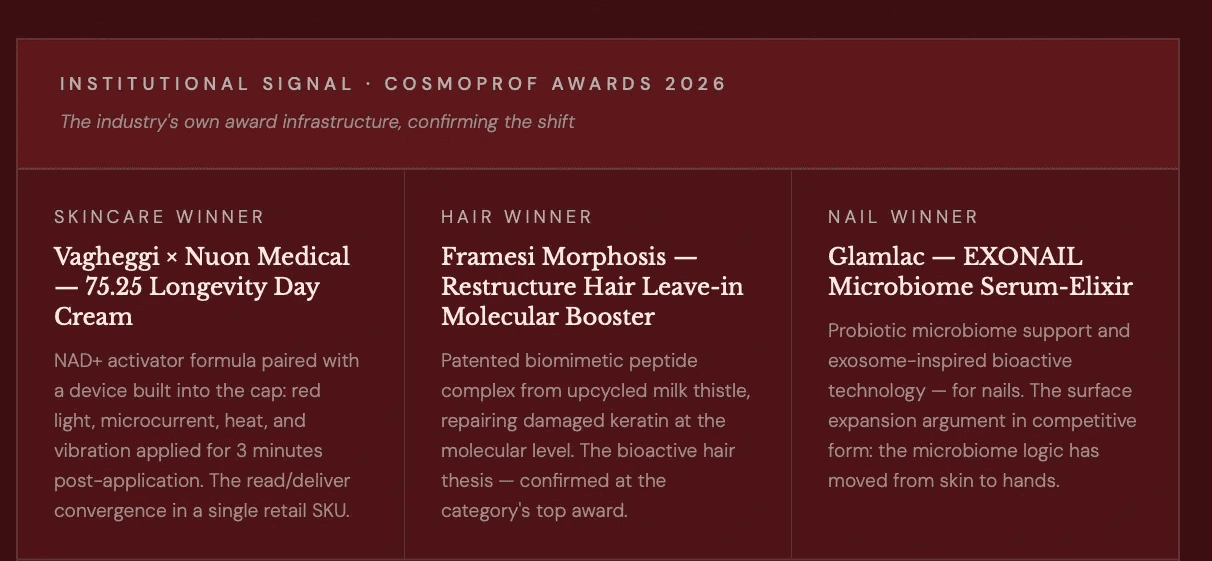
When these win across three separate categories at the same trade show, the signals in the search data are no longer early-stage. They are materializing at the product level and the industry is beginning to reward them. And as cultural strategists, we know we must follow the rewards systems to understand what’s next.