Cultural signals
Trend case studies
Behavioral shifts
Beauty's Accountability Era is Upon Us
Consumers want transparency, but not just in ingredients. They want it in intent. Why are brands suggesting this product? What problem does this routine solve—and for whom?

[originally posted on June 2025]
What comes to mind when you picture an “IT girl” or a “wellness girly”?
Maybe she’s walking out of a 6 a.m. workout, hair slicked into place, skin dewy from something expensive. She drinks from a glass bottle, microdoses light therapy, never skips SPF.
She’s polished but natural. Effortless but disciplined. She's probably also exhausted.
This image didn’t emerge from nowhere. For centuries, women have been praised (and pressured) for their upkeep. In the 1800s, they drank arsenic for pale skin. In the 1950s, they swallowed tapeworms to stay thin. Today, the tools have changed, but the expectation remains: to delay decline in a way that appears casual but demands real time, money, and care.
And this time, it’s dressed as “wellness” or "self-care."
The new face of compliance
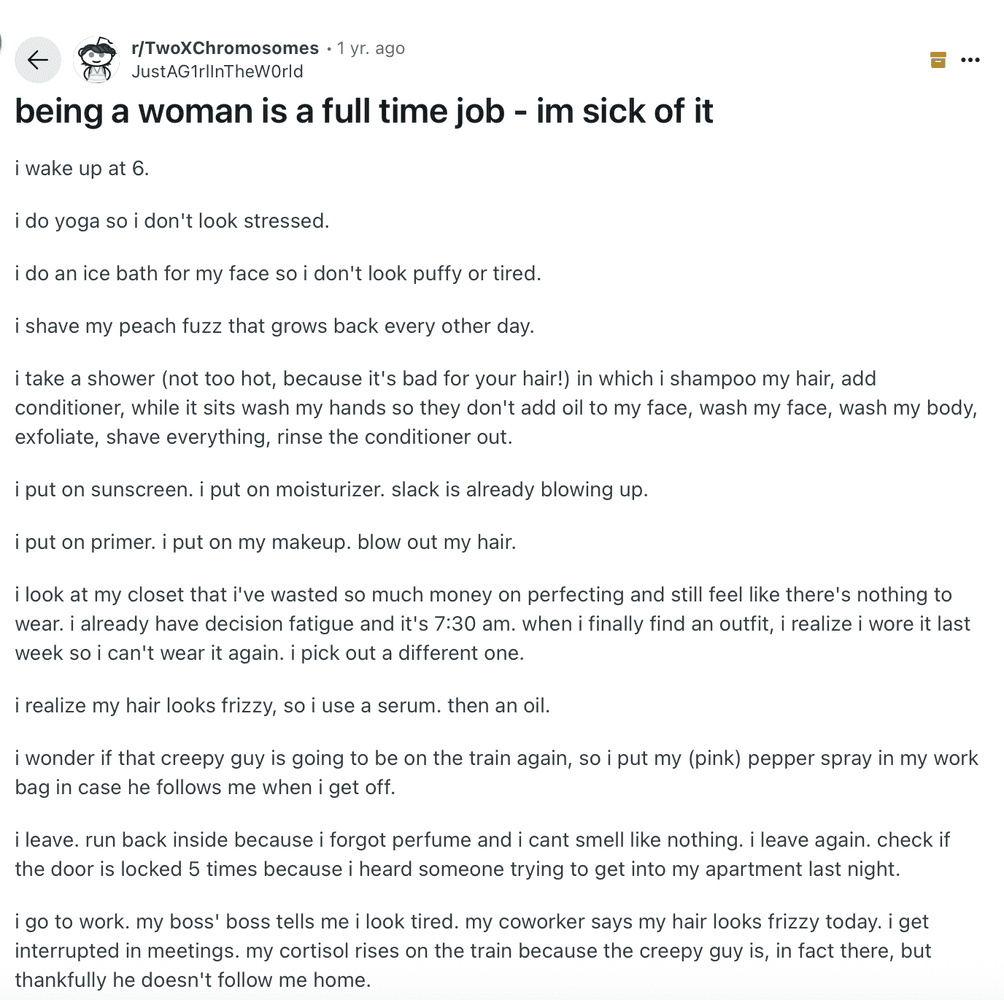
What we call self-care is often self-surveillance. Skincare routines, fitness regimens, “clean girl” aesthetics, they are framed as empowering acts of personal investment. But many women experience them as maintenance work, quietly required in order to remain visible, relevant, and respected.
Once, beauty was indulgence. Now, it’s strategy.
In 2023, facelifts rose 8%. Injectables, 7%. Teen skincare spending hit a five-year high. Several of my friends, still in their 20s, already plan for the procedures they’ll get in their 30s. Today’s beauty economy focuses on selling foresight. It tells consumers to act now, before time shows up on their faces.
The result? Rituals of care that feel more like crisis response. Early Botox. Preventative lasers. Vitamin C at twelve. Retinol at sixteen. Not out of vanity. Perhaps in the name of self-care, but unmistakably out of fear.
In this framework, visible aging is seen as a failure to prepare, and more women are beginning to feel the weight of constant maintenance.
The performance of “effortlessness”
This is the tension brands rarely name: the pressure to look natural, but edited. To age “gracefully,” but in a way that makes everyone around comfortable. To be seen, but not scrutinized.
Even the most minimal beauty looks are now engineered. Under-eye fillers for the illusion of rest, facial yoga to simulate glow, multi-step regimens for “no-makeup” skin. The aesthetic is authenticity, but the labor is anything but. The real work is hiding the work.
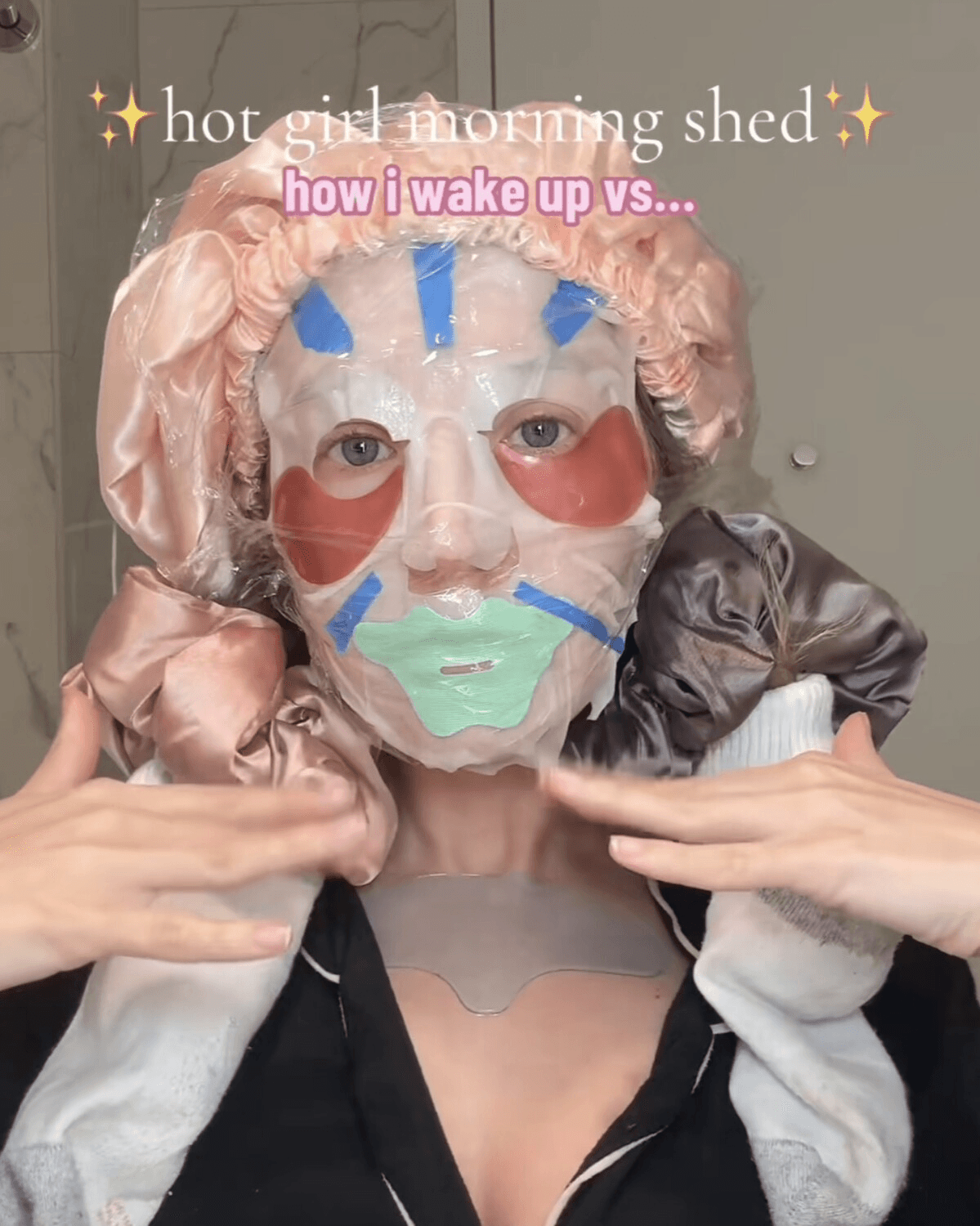
That labor is largely unspoken and unpaid. But it powers a $180 billion skincare industry that shows no sign of slowing down. But access to that upkeep is not evenly distributed. The aesthetics of care often require the privileges of time, money, and proximity. Many marginalized communities excluded from the rituals, and therefore the rewards, of being seen as “well kept".
When brands only speak to a narrow demographic, they place the burden on consumers to conform...or risk being left behind.
The brand dilemma: sell hope, or fuel panic?
This is the cultural crossroads. For brands in the beauty and wellness space, the traditional value prop "look better, younger, faster", is starting to show its age.
The existing framework is beginning to crack. Consumers are questioning the logic of fear-based beauty: interrogating the systems behind their routines, challenging the urgency to consume, and seeking care that feels honest, not obligatory.
So what happens when fear stops selling? That’s the future the industry must now design for.
The future of beauty is accountable
We are seeing a shift from self-surveillance to self-stewardship. From aspirational aesthetics to conscious care. Consumers want transparency, but not just in ingredients. They want it in intent. Why are brands suggesting this product? What problem does this routine solve—and for whom?
Aging isn’t the problem. The problem is a culture that treats it like one.
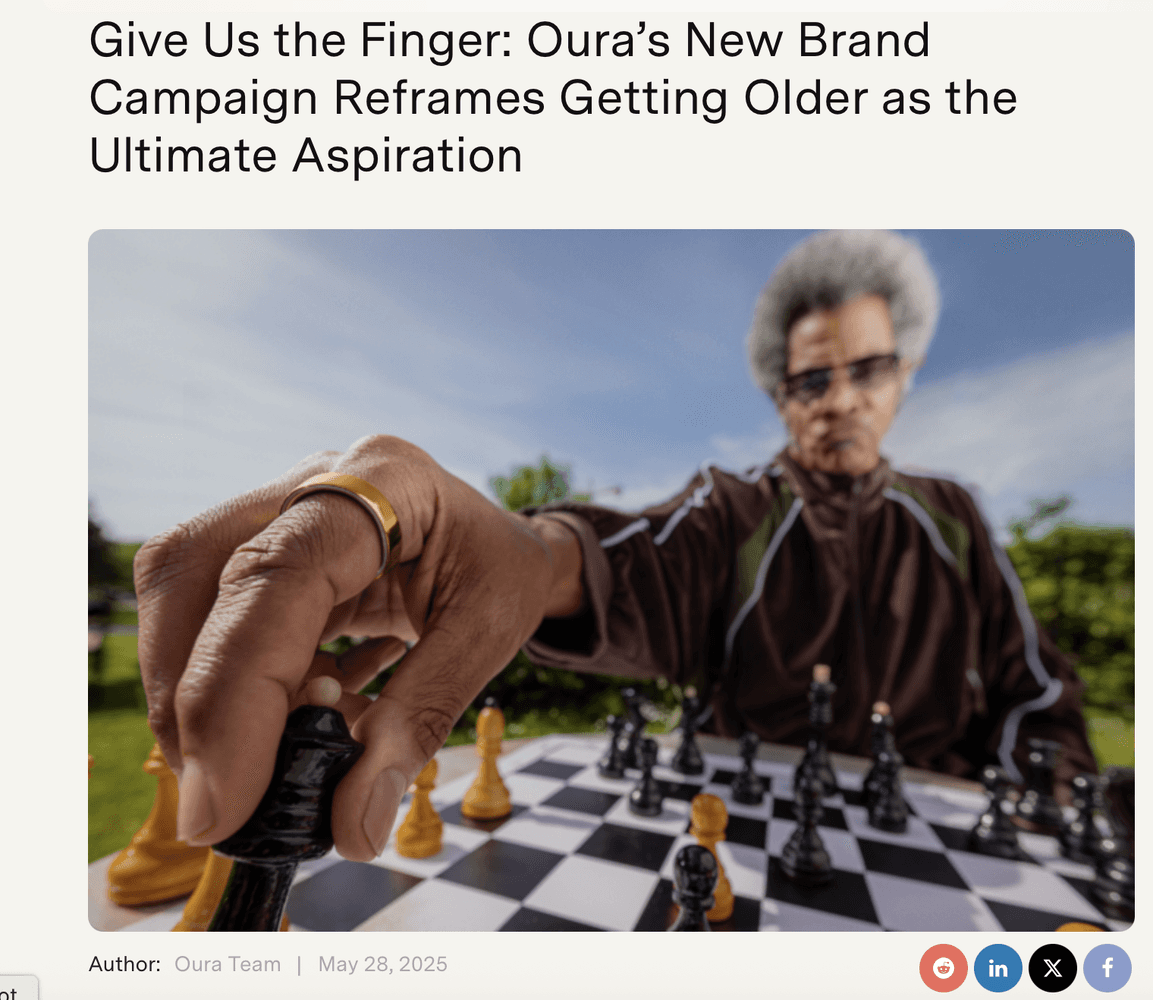
Some brands are already beginning to break with the old narrative. Oura’s recent campaign, centers physiological wellness over polished appearance. There’s no talk of glow or anti-aging; just the aspiration to feel safe in yourself.
Dove’s “Cost of Beauty” initiative confronts the emotional toll of beauty pressure, focusing on mental health rather than skin texture. Typology Paris repositions skincare as “skin education,” moving away from flawless ideals toward informed rituals. And brands like Dieux Skin openly challenge overconsumption, reminding consumers that more products don’t always mean better results.
These shifts signal represent a cultural reckoning with the values that have shaped the industry for decades.
The brands that will lead the next decade won’t promise to erase time. They’ll honor it and help consumers celebrate care without turning it into a full-time job. They’ll trade perfectionism for presence, and bring back the joy of simply existing in our bodies, without the constant, subtle suggestions that we should always be improving them.
We created a culture that rewards beauty as performance, but the boldest brands will make space for rest. They’ll understand that consumers are exhausted by upkeep, skeptical of perfection, and ready for rituals that feel restorative, not required.
These brands will lead the next wave of beauty by setting the new standard. They will be positioned not as add-ons, but as essential partners in a more sustainable, inclusive, and accountable definition of care.